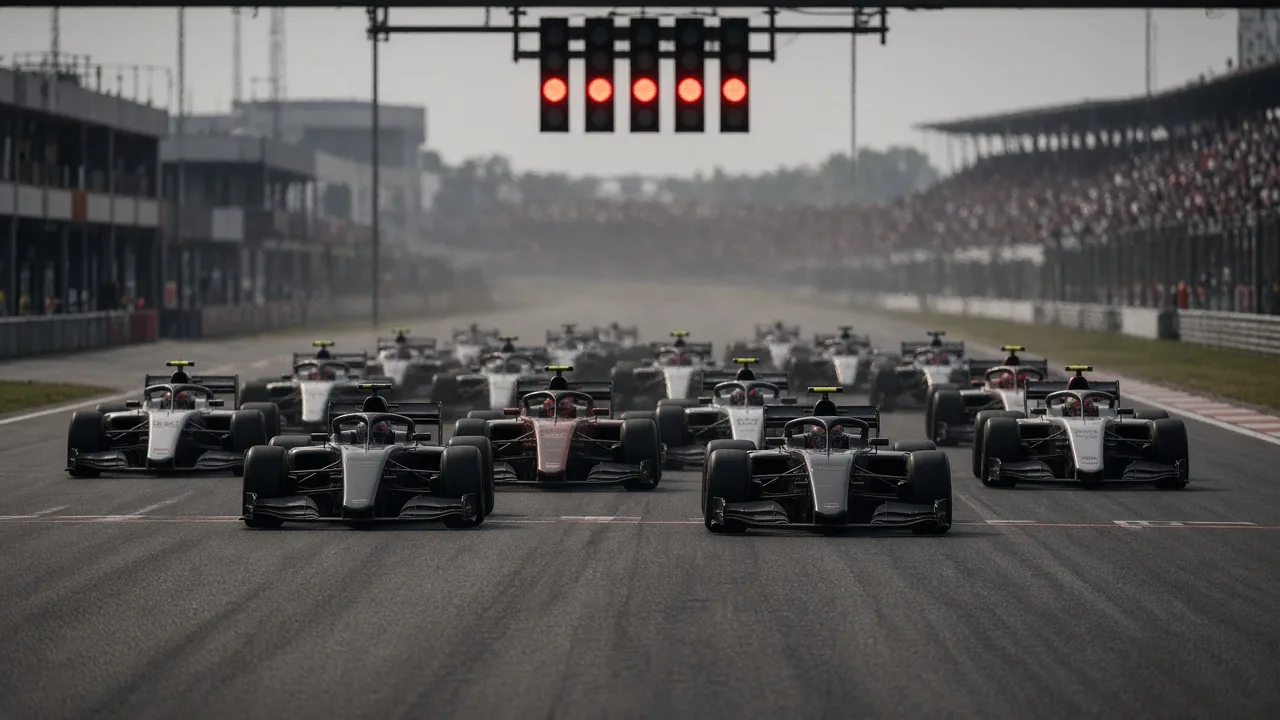
Drivers' heart rates could be on your TV as early as 2027: F1 announces WHOOP partnership
F1 has signed a partnership deal with wearables firm WHOOP. Drivers who sign up will wear its bands in the car, and data such as heart rate could feed TV graphics as early as 2027. F1 has not said how many drivers are in.
Last updated
Formula 1 fans may soon see how hard a driver's heart is working at 300km/h. "We will be able to see heart rate data of F1 drivers on TV broadcasts from 2027 after wearables company WHOOP signed on with the motorsport series," Autosport posted on X on Wednesday.
The deal
According to Autosport's report, WHOOP is joining F1 as a commercial partner. Drivers who sign up will wear WHOOP bands inside the car, and data such as heart rate will feed F1's storytelling, from social media graphics to overlays on the live TV broadcast, as early as 2027.
F1 did not say how many drivers will take part. Autosport understands deals are being finalised case by case and at least a handful of drivers have already signed up. Ferrari signed its own WHOOP deal earlier this year, and Lewis Hamilton and Charles Leclerc already use the bands.
What the bands measure
Autosport says the devices track heart rate, heart rate variability, sleep quality and VO2 max. F1's announcement says the partnership will deliver "select insights" in collaboration with the drivers, giving fans "a real-time window into the physical realities of racing".
WHOOP chief executive Will Ahmed said: "For decades, fans have had incredible insight into the cars, but less insight into the impact that races have on the drivers. Now, for the first time, we can show what happens inside a driver's body during the most intense moments of a race."
Why it is opt-in
The wording matters. F1 talks about insights delivered "in the right way in collaboration with the drivers", and is signing them one by one. Health data is personal, so expect drivers to have a say in what is shown. This weekend's race is covered in our Las Vegas hub.
Our read
Analysis: heart rate overlays have worked in other sports because they turn effort into something viewers can see. In F1 the most interesting numbers may come from a start, a safety car restart or a last-lap defence, if drivers agree to share them.
What happened next
Background
Tags
Sources
Related stories
More from the News desk.